

Reframing Fitness Conversations for Stronger Retention


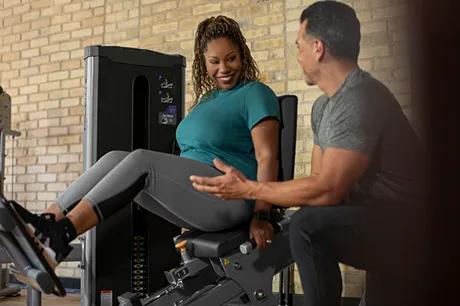
For decades, fitness culture has leaned heavily on the scale as the ultimate scoreboard. Drop a few pounds and you’re praised. See the number creep up and suddenly you’re “off track.” But what happens when the scale doesn’t tell the whole story, or worse, when it undermines motivation?
Retention today isn’t just about offering great equipment. It’s about creating an environment where members feel seen, supported and successful, even when the scale isn’t moving. The key to unlocking that? The words we use and the way we listen.
Why Words Matter in Fitness Conversations
The way we talk to members about progress can build trust or unintentionally reinforce harmful assumptions. Words are powerful: they can inspire and motivate or they can discourage and shame. Even well-intentioned compliments like “you look leaner” can reinforce the idea that appearance equals health. Over time, that language can make members feel judged rather than supported.
When fitness professionals choose words with care, they shift the focus from how a body looks to what a body can do. Phrases like “you’re getting stronger,” or “your energy seems higher this week” help members connect effort with meaningful outcomes. Language shapes mindset and mindset shapes adherence. By celebrating functional progress rather than appearance, professionals can help members build confidence and stay engaged long term.¹
Active Listening: More Than Just Nodding Along
One of the most powerful ways to shift this dynamic is through active listening. Careful listening expands the professional’s role because members recognize when their needs are truly being heard.
Active listening means:
- Asking open-ended questions rather than defaulting to a template plan.
- Reflecting back what you hear to affirm understanding.
- Digging below the surface. “I want to lose ten pounds” may really mean wanting more energy or confidence.
- Checking assumptions at the door. Appearance or body size doesn’t define fitness.
When professionals adopt this mindset, members feel understood as whole people, not just numbers on a chart. That sense of connection drives deeper engagement and ultimately, better retention.²
Moving Away from Loss-Framed Messaging
The industry has long leaned on “loss-framed” messages: Lose 10 pounds fast. Drop a dress size. While these grab attention, they reinforce a weight-first culture we’re trying to move beyond.
Today’s consumers are shifting priorities. People can now see the connection between their workouts and mental health, stress relief and functional strength. They want to feel strong, energized and capable, not just lighter. This creates an opportunity to pivot toward gain-framed messaging:³
- Gain strength and resilience
- Gain more pain-free days
- Gain confidence in movement
- Gain energy for life outside the gym
When members see their gym as a place where they “gain” rather than “lose,” they��re more likely to stay motivated and engaged.
The Pitfalls of Over-Praising Weight Loss
Weight loss can feel like success, and many members will still come in with that goal. But focusing too heavily on the number can backfire. A member might lose muscle instead of fat or feel fatigued and less functional.
One example is common with the new generation of weight management and obesity medications (like GLP-1 receptor agonists). A patient might see the scale drop while experiencing nausea or low energy. To them, the number looks like success but their quality of life tells a different story. Without additional goals like improved strength or energy, progress feels hollow.
This is why fitness professionals must broaden the definition of progress. It’s not enough to ask, “What’s the number?” We need to ask, “How do you feel? What can you do now that you couldn’t before?”⁴
Measuring What Matters Beyond the Scale
This is where tools like body composition analysis transform the conversation. Unlike the scale, which only shows weight, body composition reveals the quality of what’s changing inside like fat mass, muscle mass and tissue balance.⁵
When facilities use these tools consistently, members can see gains in muscle or function even when the scale stays the same. That’s powerful feedback that keeps them coming back.
And the good news? These tools are no longer limited to labs. Validated bioimpedance devices, some of which are validated against MRI for accurate skeletal muscle mass assessment, now make it possible to track meaningful progress in a facility-friendly way.⁶ Used consistently, they become a retention tool as much as a measurement tool.
Building Motivation Through Personalized Progress
At the end of the day, motivation isn’t just about metrics, it’s about meaning. Members want to know their efforts are paying off in ways that matter to them personally. One of the fastest ways to keep them engaged is by reflecting functional wins they might miss:
- Increased strength (lifting more weight, more repetitions, or faster recovery)
- Better stamina (longer distances, faster times, lower RPE at the same workload)
- Improved daily capacity (fewer pain days, more energy for daily tasks)
- Enhanced mental health (reduced stress, better mood, improved sleep)
- Seeing long-term muscle preservation or gains
Fitness professionals can reframe progress by celebrating these diverse wins. We can remind members, as Dr. Karli Intlekofer describes it, to “race their ghost,” comparing themselves to where they were a year ago, rather than to an unrealistic image on social media.
When members connect their gym experience to their values, such as being present with family, staying independent as they age or building confidence in daily life, the motivation sticks. That’s how short-term goals turn into long-term behavior change.7
Final Takeaway
Retention is the lifeblood of your business. Members quit when they can’t see progress. Our job is to make progress visible, meaningful and motivating. That happens through language:
- Listening actively to uncover real goals.
- Challenging assumptions about appearance.
- Shifting from loss-framed to gain-framed messages.
- Reflecting back functional wins, not just weight changes.
- Connecting short-term motivators to long-term values.
When we change the way we talk about progress, we don’t just help members stick with their programs, we help them build healthier, more confident lives. And that’s the kind of success that keeps people coming back year after year.
By shifting from weight-focused to strength- and function-focused conversations and by practicing genuine active listening, facilities can offer more than workouts. They can offer members a sense of progress, purpose and partnership.
And that’s what keeps people coming back, not just for the treadmill or the dumbbells, but for the belief that their gym is a place where they are understood, supported and celebrated beyond the scale.

Nina Crowley, PhD, RD, is a nationally recognized expert in body composition and obesity care. With a PhD in Health Psychology, she blends clinical expertise with a deep understanding of behavior change and patient-centered care. As Director of Clinical Education and Partnerships at seca, she leads strategic collaborations to advance education and access in obesity and metabolic health. Nina serves on the Board of Directors for the Obesity Action Coalition and hosts the podcast "In the Know with Nina," where she explores body composition, obesity care, and health innovation.
